Water Damage Restoration in Downey, CA
Water Damage Restoration in Downey, CA is graded on the IICRC S500 water categories, which decide whether materials can be dried in place or must be removed. The EPA puts mould growth at 24 to 48 hours after water intrusion, so extraction timing drives the scope of the job.
How much does water damage restoration cost?
Water damage restoration typically costs $1,300–$5,600 in California, depending on damage severity and affected area.
- •Category 1 (clean water — burst pipe, appliance leak): $1,300–$3,000
- •Category 2 (grey water — dishwasher, washing machine): $2,500–$5,000
- •Category 3 (black water — sewage, flooding): $4,000–$8,000+
- •Standard homeowners insurance covers sudden, accidental water damage
- •Mold begins growing within 48 hours — fast response is critical
- •Free inspection — call (888) 510-9436 for a written estimate
Key Takeaways
- ✓Industrial extraction equipment, commercial dehumidifiers, and antimicrobial treatment
- ✓Free inspection — call (888) 510-9436
- ✓Serving Downey and surrounding CA communities
Water Damage Restoration Services in Downey
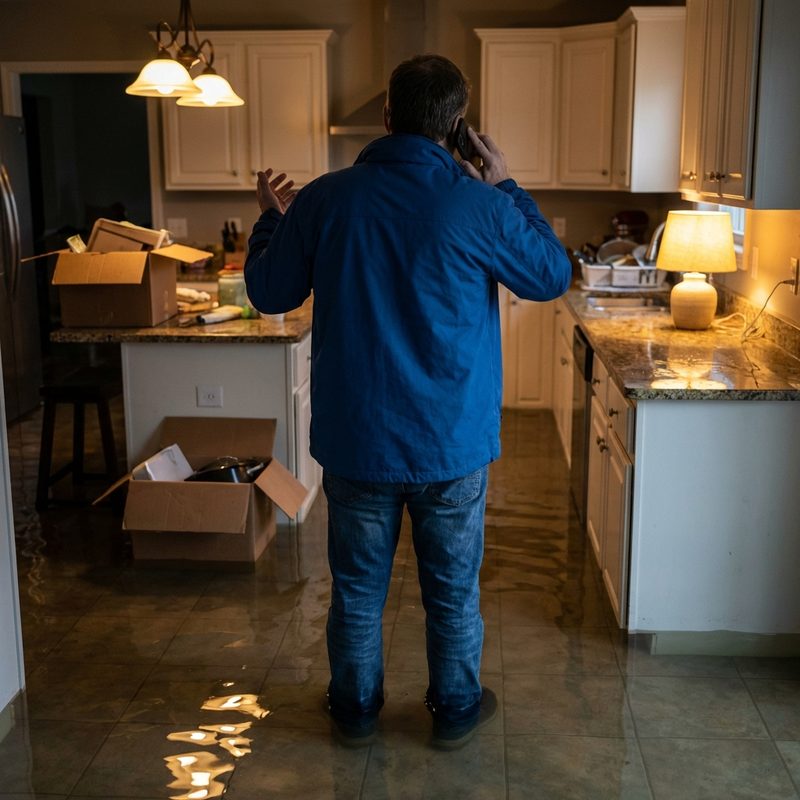
When water damage restoration is needed in Downey, fast professional response is critical. Water Damage Champ provides water damage restoration throughout Downey, CA. Fast source control, extraction, and drying can reduce secondary damage and restoration cost.
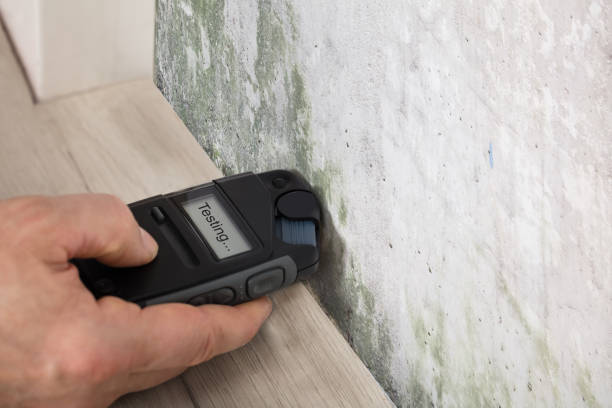
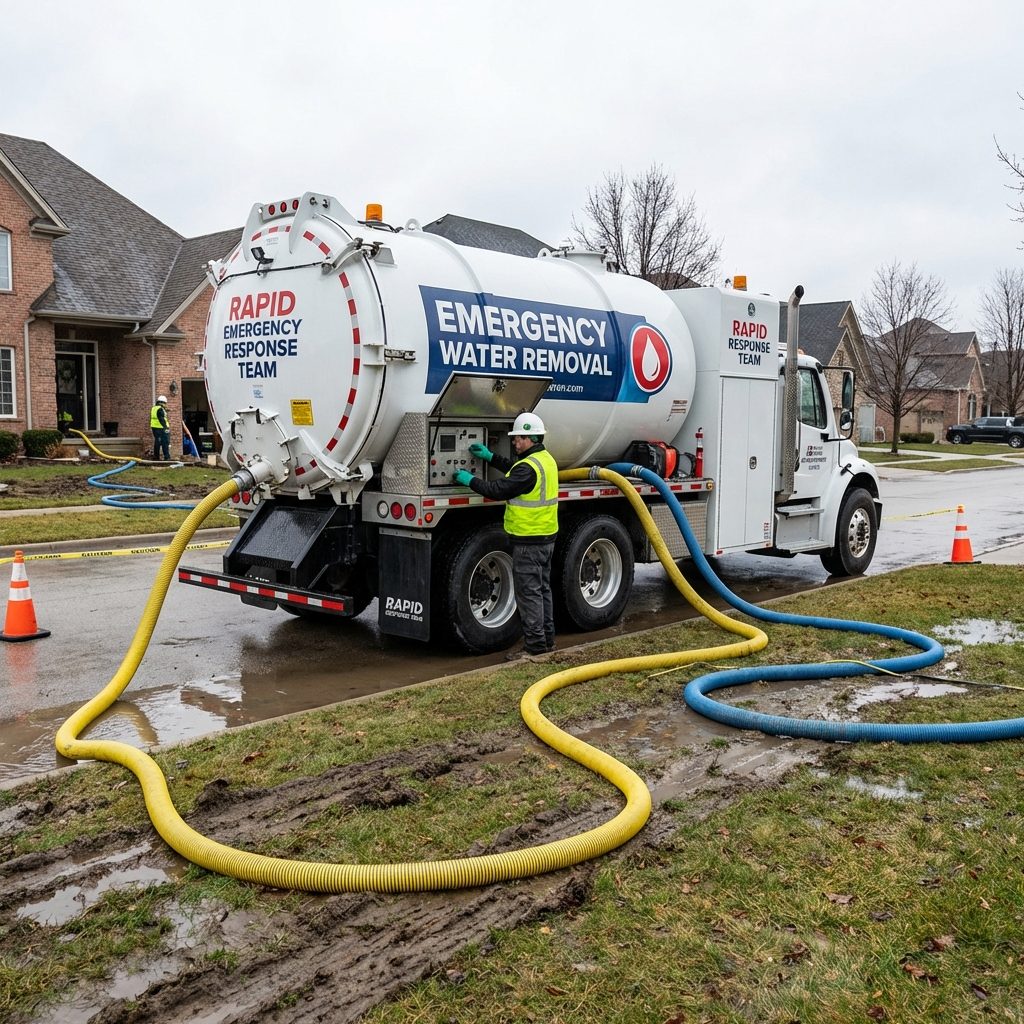
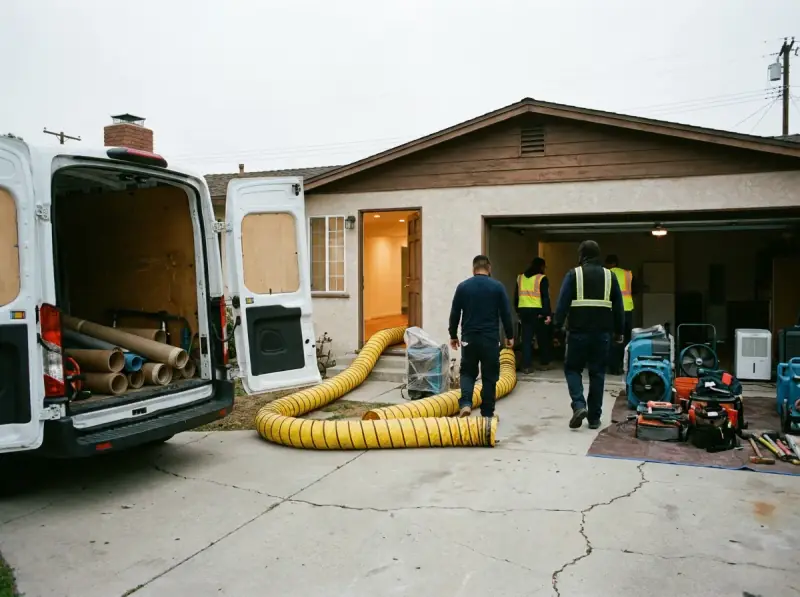
Downey properties face a range of water damage risks, from aging infrastructure and storm-related flooding to plumbing failures and appliance leaks. Our team responds with truck-mounted extractors, commercial-grade structural drying systems, and moisture mapping technology to locate hidden water behind walls and under floors.
Many water damage jobs involve photos, moisture readings, and documentation for insurance review. Coverage depends on your policy and the cause of loss. Visit our Downey service area page for more local information.
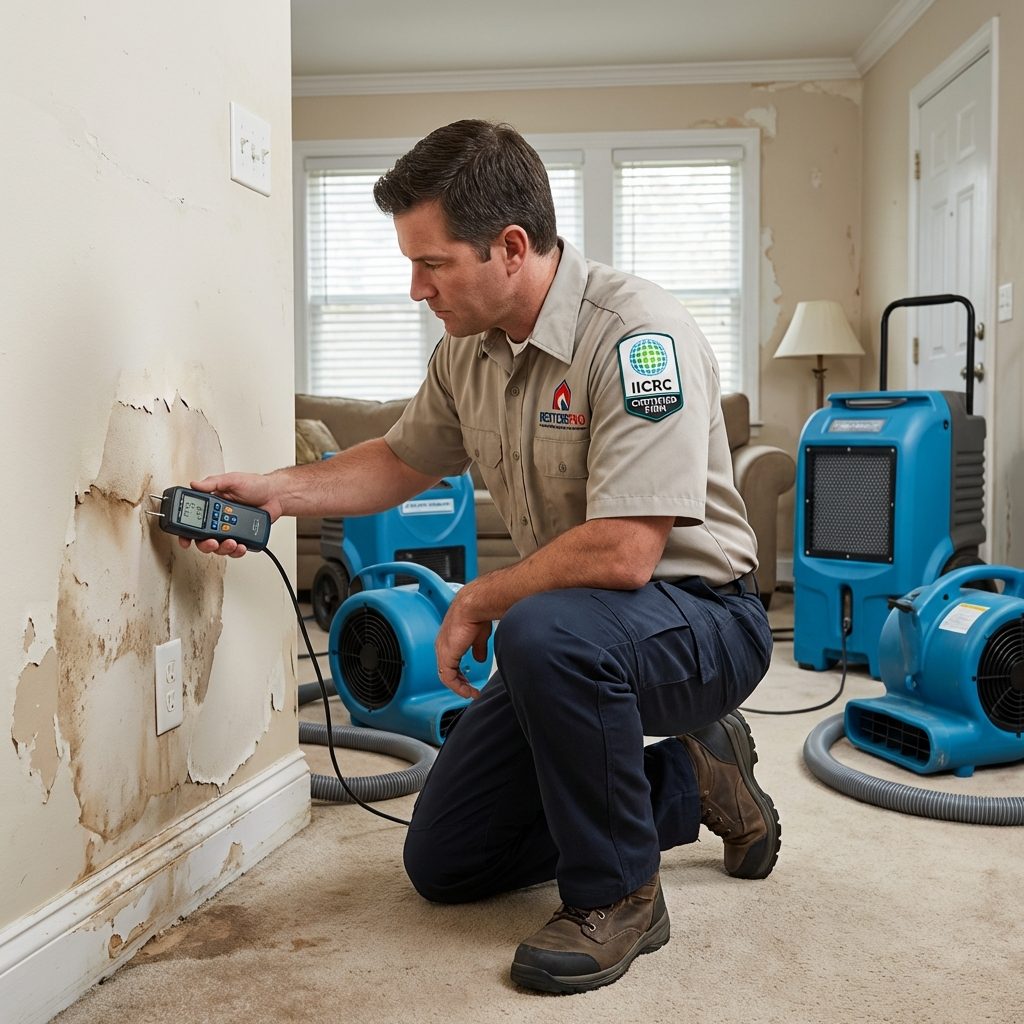
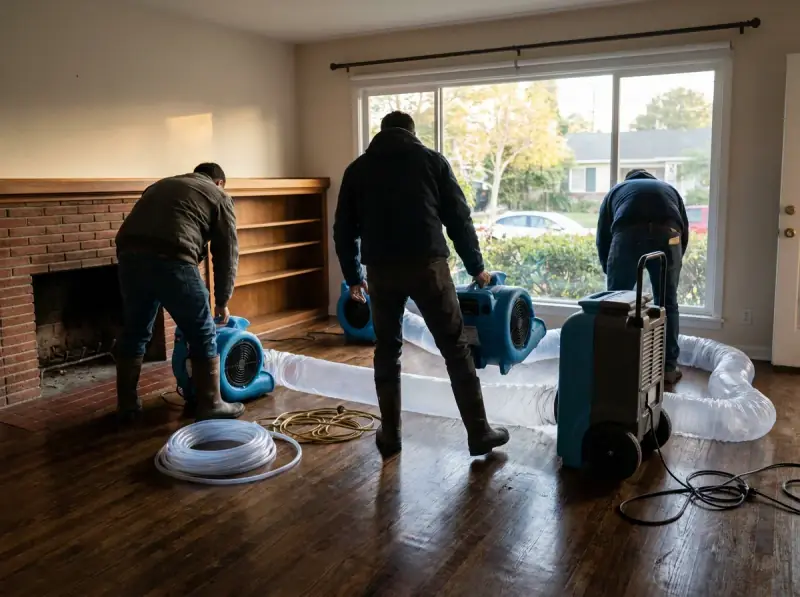
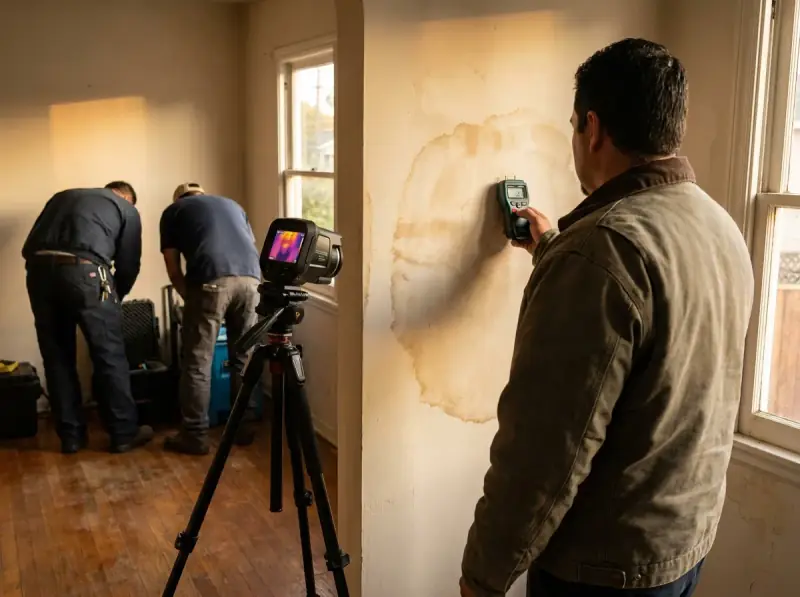
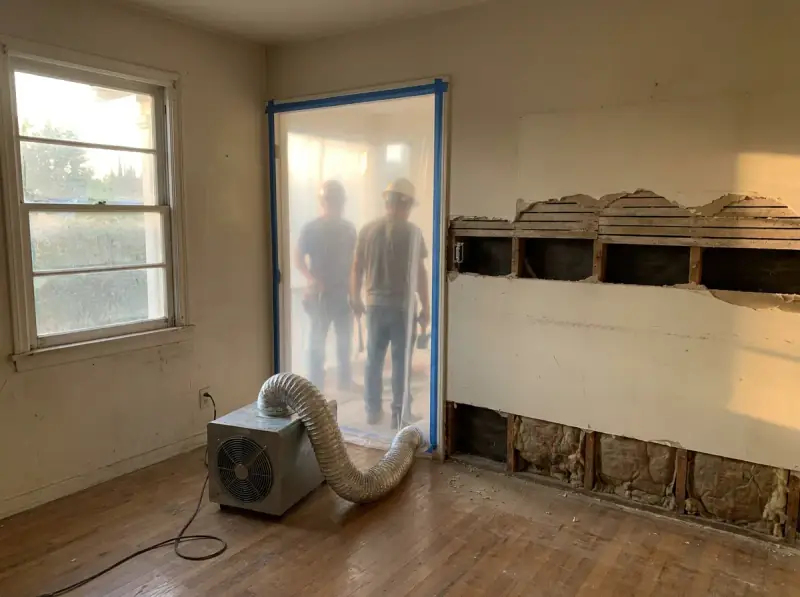
How a Downey restoration runs
Water damage conditions in Downey
Downey experiences a semi-arid Mediterranean climate with hot, dry summers and mild winters. Located in southeastern Los Angeles County, the city faces water damage risks from the Rio Hondo River, aging storm drain systems, and urban flooding in densely developed areas.
Crews work across Downey landmarks and corridors including Downey City Hall, Columbia Memorial Space Center, Downey Theatre, Oldest McDonald's Restaurant, Rio Hondo River.
Which response fits which situation
The IICRC S500 standard sorts a loss into one of three water categories, and that category — not the size of the puddle — decides whether materials are dried in place or removed. This is the framework a Downey property is assessed against.
| Situation | Category | What happens to materials | Typical drying |
|---|---|---|---|
| Burst supply line or clean water, caught early | Category 1 | Most materials dried in place | 3 to 5 days |
| Appliance or fixture overflow, standing over 48 hours | Category 2 | Carpet pad removed, drywall cut to the moisture line | 4 to 7 days |
| Sewage, ground water, storm flooding or debris flow | Category 3 | Porous materials removed, structure cleaned and sanitised | 5 to 10 days plus clearance |
A Category 1 loss can become Category 2 if it sits, which is why response time changes cost more than the initial volume of water does. Drying is verified with meter readings rather than by how dry a surface feels.
What to do in the first hour
What happens before anyone arrives decides how much of the structure is salvageable. These steps apply to any Downey property, in this order.
- 1.Stop the water at the source. Close the fixture shutoff if the leak is local, or the main if it is not. On a supply-line break the main is usually at the street side of the property or in the garage.
- 2.Kill power to affected circuits at the panel before entering standing water. Do not step into water that reaches outlets, and do not reach for a panel that is itself wet.
- 3.Photograph everything before moving it. Insurers assess the loss from its original state, and pictures taken after cleanup routinely cost more in a claim than the cleanup saved.
- 4.Do not run the HVAC system if the water is Category 2 or 3. Circulating air through affected rooms moves contamination into ductwork and the rest of the building, turning a contained loss into a whole-property one.
- 5.Lift what still lifts. Get rugs, electronics and furniture legs off wet flooring. Furniture stain and rust transfer into carpet within hours and rarely comes out afterwards.
- 6.Leave saturated drywall and insulation alone. Pulling material before it is documented and its moisture mapped can complicate the claim, and wet insulation inside a wall cavity needs meter readings to scope properly.
Local Water Damage Restoration Conditions in Downey
Our Downey coverage data includes neighborhood-level restoration notes for areas like Downtown Downey. Local properties commonly include mix of 1930s-1950s commercial-era residential, postwar bungalows, and some mid-century civic-adjacent apartment buildings. Older Craftsman and Spanish Revival homes near Florence Avenue corridor, many with original plumbing and post-and-pier or early slab foundations. Commercial-to-residential conversions increasing along the civic core.
Weather and building conditions also affect drying strategy. Inland Los Angeles Basin Mediterranean with warm dry summers and concentrated winter rainfall; significant impervious surface coverage from commercial and civic development reduces infiltration and accelerates stormwater runoff during atmospheric river events. That changes how our crews place dehumidifiers, inspect wall cavities, and monitor structural moisture after a water damage restoration call.
| Common Downey Risk | How We Handle It |
|---|---|
| Rio Hondo River flood risk for low-lying properties near the channelized corridor | Moisture mapping, source control, extraction, structural drying, and photo documentation when documentation is part of the job. |
| Aging galvanized and early copper plumbing in pre-1960 residential stock | Moisture mapping, source control, extraction, structural drying, and photo documentation when documentation is part of the job. |
| Clay soil foundation movement causing slab cracking and pipe displacement | Moisture mapping, source control, extraction, structural drying, and photo documentation when documentation is part of the job. |
| Storm drain surcharge flooding along Florence Avenue and Firestone Boulevard | Moisture mapping, source control, extraction, structural drying, and photo documentation when documentation is part of the job. |
| Sewer lateral failures from root intrusion in mature street-tree neighborhoods | Moisture mapping, source control, extraction, structural drying, and photo documentation when documentation is part of the job. |
Crews regularly cover calls near Downey Civic Theatre, Downey City Hall, Florence Avenue, Firestone Boulevard, Downey Museum of Art, Apollo Park, Stonewood Center, Lakewood Boulevard, and the surrounding residential and commercial corridors.
Our Water Damage Restoration Process in Downey
Request Intake
Call or request help so the affected area, water source, and access details can be reviewed.
Inspection & Documentation
Moisture mapping, photos, and job notes help define the affected materials and drying plan.
Extraction & Drying
Industrial extraction and commercial drying equipment running continuously until all moisture readings reach safe levels.
Clearance & Restoration
Final moisture verification, antimicrobial treatment, and structural restoration to pre-damage condition.
Neighborhoods We Serve in Downey
Each neighborhood page below includes local building stock, ZIP codes, landmarks, and common water damage scenarios so you can confirm we cover the exact part of Downey where the loss happened.
ZIP 90241
Mix of 1930s-1950s commercial-era residential, postwar bungalows, and some mid-century civic-adjacent apartment buildings. Older Craftsman and Spanish Revival homes near Florence Avenue corridor, many with original plumbing and post-and-pier or early slab foundations. Commercial-to-residential conversions increasing along the civic core.
Most common here: Rio Hondo River flood risk for low-lying properties near the channelized corridor.
ZIP 90241
Predominantly 1950s-1960s postwar tract and semi-custom single-family homes, representing the primary residential buildout era of Downey's growth as an aerospace-era suburb. Slab-on-grade foundations are standard. Most homes retain original or partially updated copper plumbing with aging under-slab supply lines reaching end-of-life threshold.
Most common here: Slab leak failures in aging 1950s-1960s copper plumbing.
ZIP 90242
Mix of 1950s-1960s postwar residential, some older pre-WWII housing near the Rancho Los Amigos vicinity, and late-1970s through 1980s infill construction. The area surrounding Rancho Los Amigos has a mix of institutional buildings and adjacent residential. Soil conditions are among the most clay-dominant in Downey, creating the most aggressive foundation movement dynamics in the city.
Most common here: Severe clay soil expansion causing foundation cracking and differential settlement.
ZIP 90240
Primarily 1950s-1960s postwar single-family residential, with some newer construction replacing or infilling near the Downey Landing commercial development and the former aerospace site. Homes in the aerospace campus-adjacent blocks are among Downey's most mature residential stock, with the corresponding plumbing and foundation aging of that era.
Most common here: Industrial legacy soil and groundwater contamination near the former aerospace complex.
Don't see your neighborhood? Call (562) 635-8160 — we serve all of Downey and surrounding areas.
Water Damage Champ Near Downey
This local map listing supports calls and service-area confirmation for water damage restoration in Downey, CA. Use it to confirm the local Water Damage Champ listing, then call (562) 635-8160 to discuss the water damage issue.
Need Water Damage Restoration in Downey?
Call to confirm water damage restoration availability in Downey, CA.
(562) 635-8160Frequently Asked Questions
Standards and sources for Downey property owners
The figures and procedures on this page follow published industry standards and government guidance. Each source below is linked so you can check it yourself.
- IICRC S500 Standard for Professional Water Damage Restoration — IICRC
The industry standard our technicians are certified and trained against, covering water categories, drying targets and documentation.
- EPA guidance on mold and moisture — U.S. EPA
Sets the 24-to-48-hour window after water intrusion in which mold growth typically begins, which is why response time matters.
- National Flood Insurance Program (FloodSmart) — FEMA / National Flood Insurance Program
Explains why standard homeowners policies exclude flood damage and what a separate NFIP policy covers.
- OSHA flood cleanup hazard guidance — OSHA
The worker-safety rules governing electrical, structural and contamination hazards on a flooded property.
- Ready.gov flood preparation and recovery steps — Ready.gov
Official guidance on what to do before entering and re-occupying a flood-damaged building.
- National Weather Service flood safety guidance — National Weather Service
Defines flood watch versus flood warning and the depth at which moving water becomes dangerous.
- verify a California contractor licence with the CSLB — California Contractors State License Board
Any restoration contractor working in California should hold a current CSLB licence you can look up by number.
- California Department of Insurance claim rights — California Department of Insurance
Your rights when filing a water damage claim, including timelines the insurer must meet.